"John 3:16" Meaning — God So Loved the World, Context, & Biblical Theology
It is the most recognized verse in the Bible.
You find it on signs at sporting events, painted on overpasses, and printed on the inside of In-N-Out Burger cups. It has been set to music, stitched into samplers, quoted in presidential speeches, and whispered at bedsides. It exists in the culture with a life almost independent of the text it comes from — a thirty-word sentence that most people in the Western world have encountered without ever opening the Gospel of John.
Which means most people have never read it.
Not really. Not in its context, in the middle of a nighttime conversation with a Pharisee who came to ask questions he was afraid to ask in the day, in a Gospel that has spent three chapters establishing who Jesus is and why He matters. When John 3:16 is read where it actually sits — not on a banner behind the goalposts but in the fourth Gospel on a dark night in Jerusalem — it says something more particular, more costly, and more demanding than familiarity usually allows.
The Context of John 3:16: Nicodemus and the Conversation in the Night
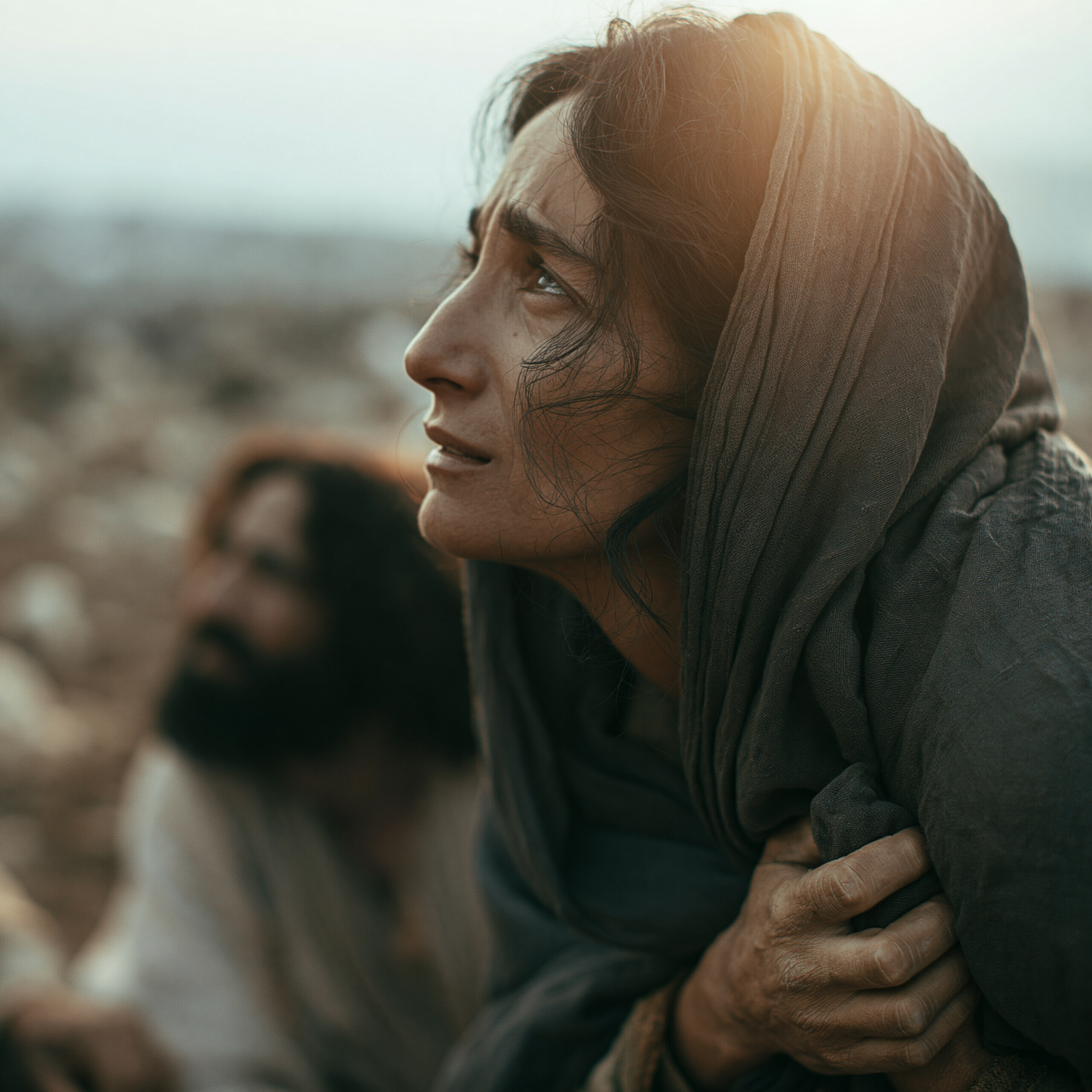
Nicodemus is a Pharisee, a ruler of the Jews, and a teacher of Israel. He comes to Jesus at night — whether from fear, from preference for privacy, or from something in him that responds to darkness, we are not told. He comes and says, "Rabbi, we know you are a teacher who has come from God. No one could do these signs unless God were with Him.”
Jesus does not accept the compliment. He cuts straight to what Nicodemus needs: “No one can see the kingdom of God without being born from above.”
Nicodemus is confused. Can a man re-enter his mother’s womb? And Jesus speaks of water and Spirit and the wind that blows where it will, and Nicodemus asks: “How can this happen?”
What follows is a movement in the text that is harder to track than it appears. Jesus continues speaking, but at some point — the transition is not clearly marked in the Greek — the voice may shift from Jesus speaking to Nicodemus to John the Evangelist speaking to his reader. The conversation becomes commentary. The specific night in Jerusalem opens into the universal claim that the Gospel has been building toward.
And in the middle of that opening, John 3:16 arrives.
The Passage: Word-by-Word Analysis of John 3:16
“For God so loved the world that He gave His only Son, so that everyone who believes in Him might not perish but might have eternal life.”
-
The sentence opens with a single motivation. God loved. The source of everything that follows is love — not obligation, not strategy, not divine policy. Love. The same word John will use at the Last Supper — having loved His own who were in the world, He loved them to the end — and in the vine and branches discourse — remain in my love. Love is the governing principle of John’s Gospel, and here it is named as the governing principle of creation itself.
So loved. The Greek word is houtos — in this way, to this extent, in this manner. God loved the world in this way: that He gave. The so is not merely an intensifier. It points to what follows as the measure and the evidence of the love. You want to know how much God loves? Look at what He gave.
-
Not Israel. Not the righteous. Not the people who deserved it, prepared for it, or could be expected to receive it well. The world. The same word John uses in the Prologue — the world came to be through Him, and the world did not know Him. The world that rejected the light. The world that preferred darkness. That world. God loved that world to the extent of giving His only Son for it.
The universality is not incidental. John’s Gospel has been gesturing toward it since the Prologue — the true light enlightens everyone, the Logos enters His own creation, He gives power to become children of God to all who receive Him. John 3:16 names it plainly: the scope of God’s love is the world. The whole of it.
-
Gave. Not sent as a messenger. Not dispatched as an ambassador. Gave — the word implies cost, sacrifice, the transfer of something genuinely precious. The Father gives the Son. And the Son, as the rest of the Gospel will show, gives Himself. The giving is mutual, voluntary, and total.
His only Son. The Greek is monogenes — unique, one of a kind, not one son among many. The relationship between the Father and the Son that the Prologue established in its first two verses — the Word was with God and the Word was God — is the relationship being activated here. What God gives is not less than Himself. He gives the one who is at His side, who shares His nature, who is His only Son in the fullest possible sense.
-
The condition is belief. Not performance. Not an achievement. Not a membership. Belief in Him — in the Son who was given, the Word who became flesh, the one this conversation and this Gospel are about. The Greek word for believe — pisteuon — is a present participle, indicating ongoing action. Not a one-time intellectual assent but a continuous orientation of the whole person toward Jesus. Everyone who keeps on believing. Everyone who remains in that belief.
Everyone. The universality again. Not everyone who was born into the right community, observed the right rituals, or achieved the right level of moral excellence. Everyone who believes. The door is as wide as the world God loved.
-
Two possibilities set against each other: perish or have eternal life. Perish in John’s Gospel is not mere physical death — it is the ultimate loss, the final separation from the life of God. Eternal life is not mere life extended indefinitely — it is the life of God Himself, the quality of existence that belongs to the one who is the resurrection and the life, shared with those who believe.
Might have — the Greek is in the subjunctive, suggesting possibility and invitation rather than automatic guarantee. The gift is offered. The door is open. But entering it requires believing that the verse names as its condition. God so loved that He gave. What we do with the giving is the question the verse puts to every reader.
Catholic Reading of John 3:16: The Gospel in Miniature, Catechism, & Eucharist
The Church has read this verse as the summary of the entire Gospel of salvation — hence the traditional title, the Gospel in miniature. Everything the faith proclaims is here in compressed form: the love of God as the source, the gift of the Son as the means, belief as the response, eternal life as the destination.
The verse has shaped Catholic preaching and catechesis across the centuries. The Catechism of the Catholic Church opens its treatment of the mystery of Redemption with the assertion that God’s plan of loving goodness, conceived before the foundation of the world, is enacted in the gift of His only Son. John 3:16 is the scriptural ground beneath that claim.
The Catholic reading is careful to hold together what the verse holds together: the universality of God’s love — the world — and the particularity of His action — He gave His only Son. The love is for everyone. The means by which that love reaches everyone is specific: one Son, one gift, one cross. The Church’s universalism and its particularity about Jesus are both rooted in this verse.
The verse also stands behind the Church’s understanding of mission. God so loved the world that He gave — the model for the Church’s own giving is the Father's pattern. As the Father sent the Son into the world He loved, so the Son sends His disciples into the same world. The mission of the Church is the continuation of the gift.
In Catholic devotional life, John 3:16 has particular resonance in the context of Eucharistic adoration — the practice of spending time in silent prayer before the exposed Blessed Sacrament. To kneel before the Eucharist is to kneel before the given Son, the gift of God’s love made present in bread and wine. The verse becomes not a memory of something that happened but the description of something happening now: God giving His Son, so that everyone who believes might have life.
The Choice of Faith: Stepping from Darkness into Light
Nicodemus came to Jesus in the night with questions he was almost afraid to ask. He received an answer that reached further than his question — further than the conversation, further than the night, further than Jerusalem, reaching into the love of God for the whole world and the gift that love produced.
We do not know what Nicodemus did with what he heard. John records that he appeared again, twice — once to ask for a fair hearing for Jesus in the council, and once to bring burial spices for His body. He moved across the Gospel, from darkness toward light. Slowly. In increments. At real cost.
John 3:16 is addressed to everyone who is somewhere on that journey — who has questions they are almost afraid to ask, who has come to the conversation in the night, who is not yet sure what to do with what they are hearing.
“For God so loved the world that He gave His only Son, so that everyone who believes in Him might not perish but might have eternal life.”
Twenty-seven words. The whole of it.
God loved. He gave. You believe. You live.
The sign on the stadium scoreboard has the reference right. It just cannot give you what reading it in context gives: the night, the Pharisee, the darkness outside, and the one who came to bring light into it, sitting across from a man who was not yet sure he could step into it.
The verse is the invitation. The Gospel is the door. The question is whether you will walk through it.