What Does "I AM the Good Shepherd" Mean in John 10?
The image is ancient. Older than the Gospel. Older than the Temple.
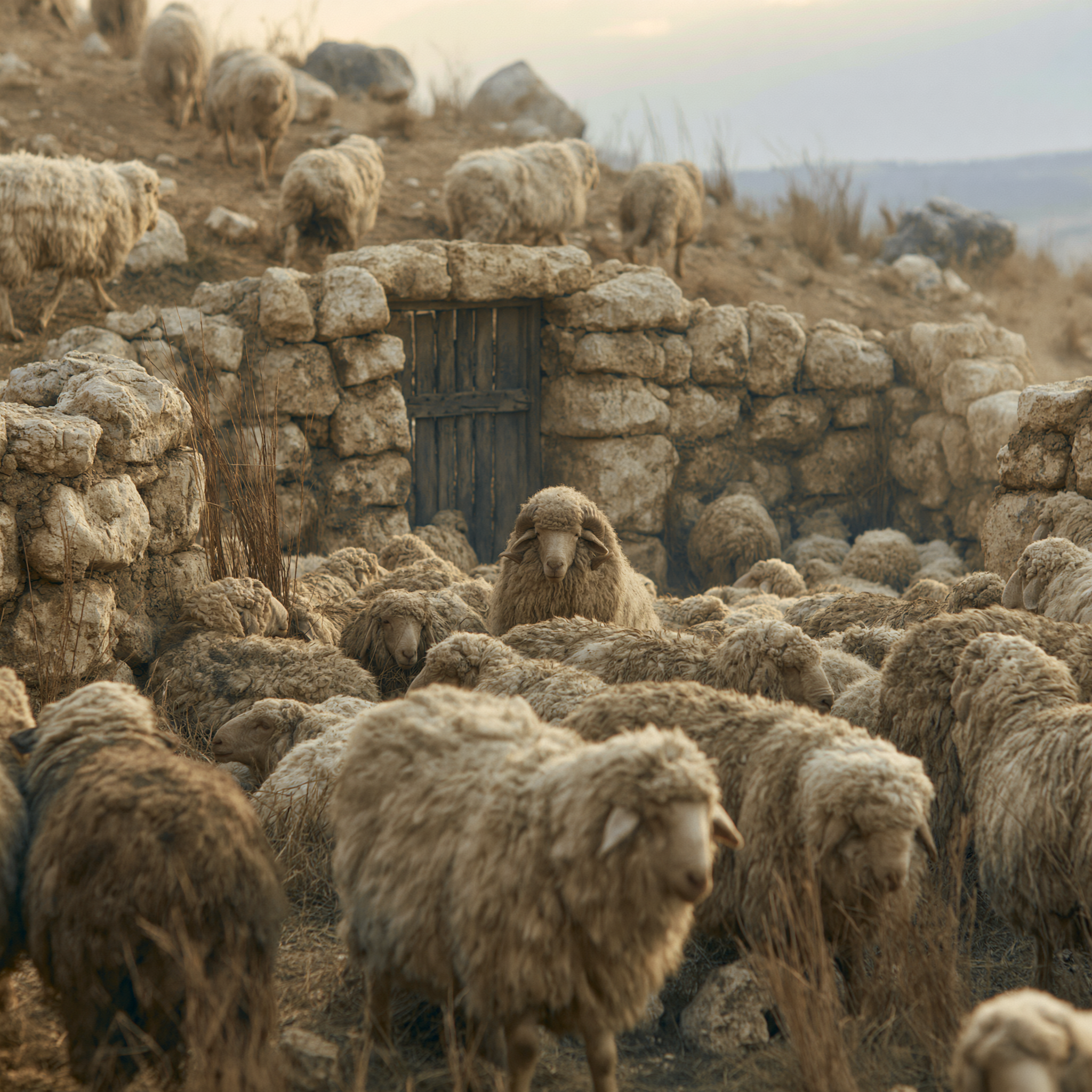
The shepherd who tends his flock, who knows each animal by name, who goes out into the wilderness to find the one that is lost — this is one of the oldest images Israel had for the relationship between God and His people. David was a shepherd before he was a king. Moses was tending his father-in-law’s flock when the burning bush spoke. The twenty-third psalm, which has been sung and whispered and read at deathbeds for three thousand years, opens with five words: “The Lord is my shepherd.”
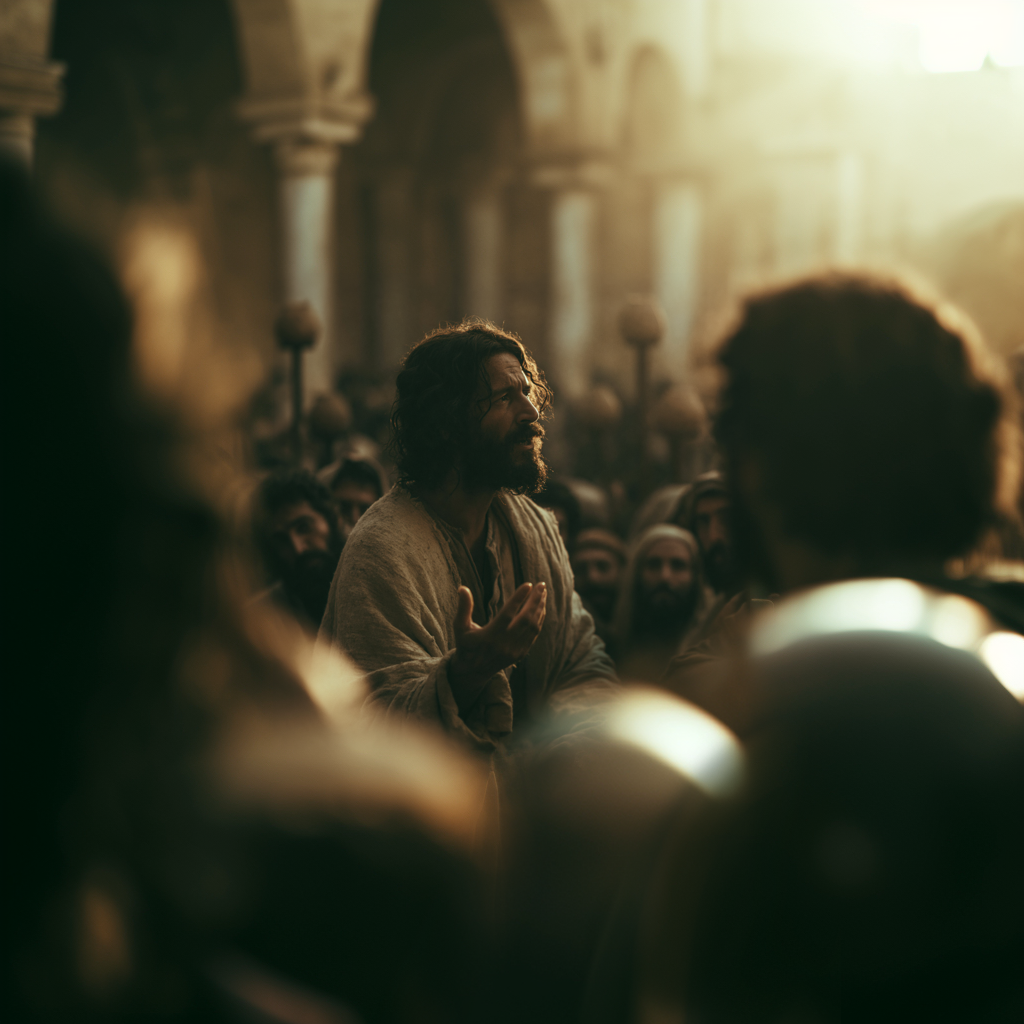
Jesus takes this image — this ancient, beloved, theologically loaded image — and steps into it.
“I am the good shepherd. A good shepherd lays down his life for the sheep.”
Not a shepherd who tends the flock carefully and goes home safe at the end of the day. A shepherd who dies for the sheep. This is what distinguishes the good shepherd from the hired hand, and it is the definition Jesus gives Himself in the middle of a discourse that begins with gates and thieves and ends with a divided crowd and the authorities reaching again for stones.
The Biblical Contrast: The Good Shepherd vs. The Hired Hand
John 10 flows directly from the healing of the man born blind in chapter nine and the subsequent confrontation with the Pharisees. Jesus has just told them they are blind guides who cannot see. Now He speaks to the same audience in the language of shepherds and sheep, and the contrast He draws is between two kinds of people responsible for a flock: the shepherd who owns the sheep, and the hired hand who does not.
The hired hand sees the wolf coming and runs. He abandons the sheep because they are not his — because his own safety matters more than theirs, because the relationship is transactional rather than genuine. He is paid to tend them, not bonded to them. When the cost of staying becomes too high, he leaves.
The good shepherd does not run. He sees the wolf approaching and stands between it and the flock. He lays down his life.
Jesus uses the phrase lay down his life four times in this passage. He is not speaking abstractly. He knows what is coming. The authorities have already tried to arrest Him and stone Him. The raising of Lazarus, just ahead in the narrative, will be the event that finally causes them to plot His death in earnest. He is speaking to people who are already planning to kill Him, and He is describing His own death as a voluntary act of pastoral care.
I lay down my life in order to take it up again, He says. No one takes it from me, but I lay it down on my own. I have the power to lay it down and the power to take it up again.
The cross, in John’s Gospel, is never something that happens to Jesus. It is something He chooses. He is not a victim of circumstances. He is a shepherd who has seen the wolf coming and planted His feet.
What "Kalos" Reveals About the Meaning of the Good Shepherd
The word good in I am the good shepherd carries more weight in Greek than its English translation suggests. The word is kalos — which means not merely morally good but beautiful, noble, genuine, of the finest quality. The good shepherd is the true shepherd, the real shepherd, the shepherd who is everything a shepherd is supposed to be, in contrast to every counterfeit.
And what the genuine shepherd is, above all, is one who knows his sheep.
I know my own and my own know me, just as the Father knows me and I know the Father. The knowledge Jesus describes is not the knowledge of a database — names and identifying features and behavioral patterns. It is the knowledge of relationship, the mutual recognition that runs between the Father and the Son and extends outward to include the sheep. To be known by the good shepherd is to be drawn into the inner life of God.
He also speaks of other sheep that do not belong to this fold. These He must also bring, and they will hear His voice, and there will be one flock, one shepherd. John is writing to a community that includes both Jewish and Gentile believers, and Jesus tells them that the sheepfold has always been larger than any single enclosure. The good shepherd is not only the shepherd of Israel. He is the shepherd of the world.
One flock. One shepherd. The universality of the claim matches the universality of the gate and the light. This is not a regional deity tending a local flock. This is the shepherd of the world, whose voice every sheep — wherever they are, whatever enclosure they have been living in — is capable of hearing and following.
The Good Shepherd in Catholic Tradition and Priesthood
The image of the Good Shepherd is the oldest surviving image of Jesus in Christian art.
In the catacombs of Rome — the underground burial places where the early Christians gathered for worship and remembered their dead during the first centuries of persecution — the figure of the Good Shepherd appears on walls, ceilings and sarcophagi. A young man, carrying a sheep across his shoulders, is surrounded by the flock. It is painted over the graves of people who died for the faith, in the dark, underground, with the empire pressing down on them from above.
They chose this image because it told them who Jesus was and what His death meant. The shepherd who laid down his life for the sheep was not an abstract theological principle. He was the reason they were willing to lay down their own.
The image has shaped the Church’s understanding of ordained ministry from the beginning. A bishop carries a crozier — a shepherd’s staff — as the sign of his office. The word pastor means shepherd. A parish priest is a pastor, a shepherd of a local flock. The Pope is the universal pastor, the successor of Peter, to whom Jesus said on the beach at dawn: “Feed my sheep.”
The charge Jesus gives Peter in John 21 — feed my sheep — is the direct application of the Good Shepherd discourse to the ministry of the Church. Those who shepherd in the Church do so in the name of and in the pattern of the one who laid down His life. The hired hand runs. The pastor stays.
Every priest who has sat with a dying parishioner at three in the morning, every bishop who has defended his flock against forces larger than himself, every deacon who has served in the places no one else wanted to go — they are living the definition Jesus gives in John 10. Not because they are perfect shepherds, but because the Good Shepherd is the one in whose name and pattern they serve.
Sunday is sometimes called the Lord’s Day in part because it is the day the shepherd gathers the flock. The Mass is the weekly gathering of the sheep around the one who laid down His life for them and took it up again. The Eucharist is the meal the Good Shepherd provides. The whole liturgy is the community of the flock, gathered, fed, and sent back out into the world until the shepherd gathers them again.
The Choice of Faith: The Wolf, the Charge to Peter, and Personal Discipleship
The hired hand runs when the wolf comes.
That is the uncomfortable center of this passage because the hired hand is not a villain. He is a reasonable person making a reasonable calculation: this is not my flock, this is not my wolf, this is not my fight. He has done his job. He has tended the sheep through the ordinary days. But when the cost of staying becomes his own life, he goes.
Jesus says: I am not that person. I am the shepherd who stays. I am the one who sees the wolf, plants His feet, and pays the price that staying entails.
And then, in John 21, He turns to Peter on the beach and asks three times: "Do you love me?”
And three times gives the same charge: “Feed my sheep.”
The Good Shepherd not only laid down His life. He raises up other shepherds and sends them back into the field. The question the passage leaves for the reader is not only whether you recognize the shepherd’s voice. It is whether, having been gathered by Him, you are willing to be sent.
“A good shepherd lays down his life for the sheep.”
He laid it down. He took it up again. And now the sheep who have heard His voice are asked the question the hired hand could not answer:
Will you stay when the wolf comes?