"I AM the Light of the World" in John 8: The Feast of Tabernacles and Divine Illumination
It is the Feast of Tabernacles in Jerusalem, and the Temple has been blazing with light.
One of the most spectacular rituals of the feast involves four enormous golden lampstands erected in the Court of the Women — the great open plaza at the heart of the Temple complex. Each lampstand holds several large basins of oil. When they are lit at the beginning of the feast, their light is said to illuminate every courtyard in Jerusalem. The rabbis taught that no courtyard in the city reflected the light of the celebration.
All night the lamps burn. Priests and Levites sing psalms. Pilgrims dance in the firelight. It is one of the most luminous nights of the Jewish year.
And then the feast ends. The lamps go out. The great plaza falls dark.
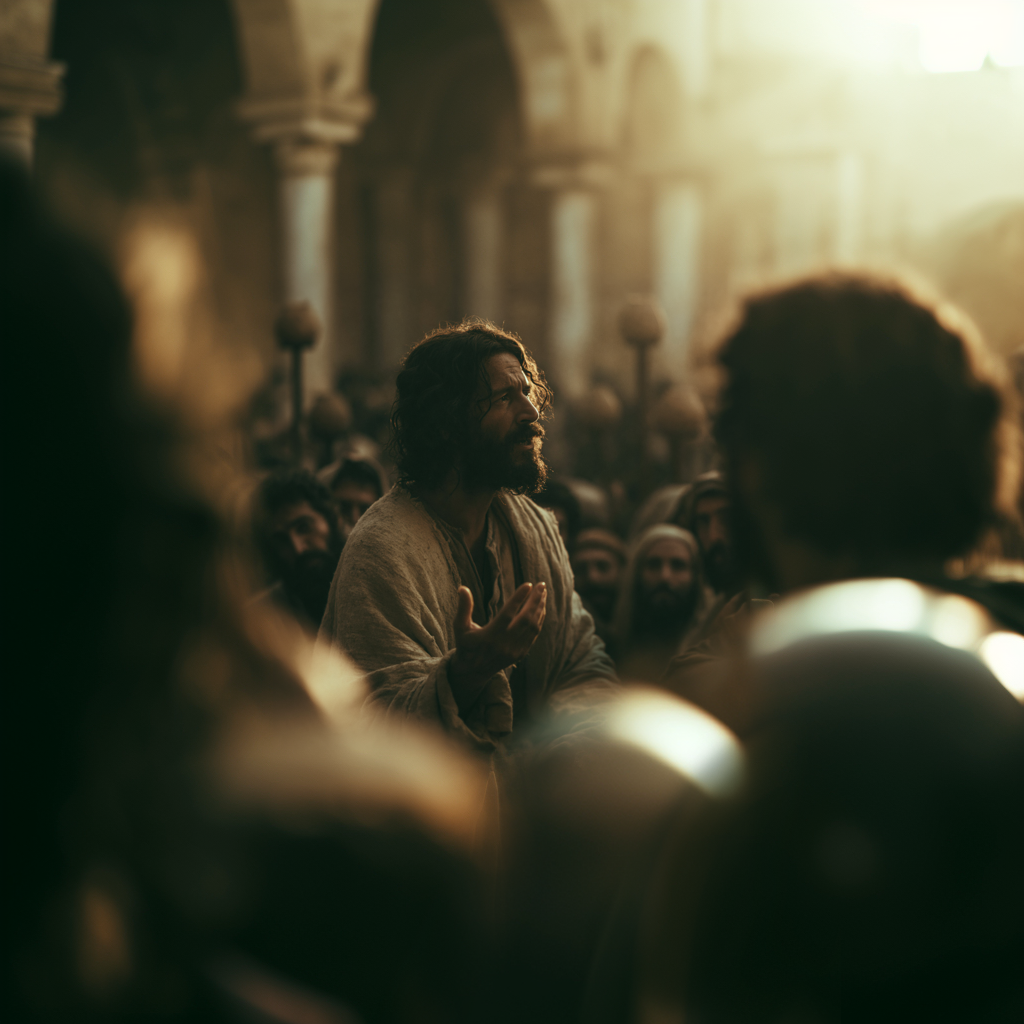
Into that darkness, in the Temple treasury — a colonnade just off the Court of the Women, where the lampstands had been burning — Jesus speaks:
“I am the light of the world. Whoever follows me will not walk in darkness, but will have the light of life.”
The Setting: The Feast of Tabernacles and the Temple Treasury
John places this statement with precision. It is the day after the Feast of Tabernacles, in the Temple treasury, immediately following the episode of the woman caught in adultery, which opens chapter eight. Jesus has just written something in the dust and watched the accusers leave one by one. Now He speaks to the crowd that remains.
The timing is everything. The lampstands of the Tabernacles have been the visual and spiritual center of the feast — the light that filled the city, that recalled the pillar of fire that led Israel through the wilderness, that pointed toward the coming of the divine glory into the world. Every person standing in the Temple treasury that morning knew what those lamps meant. And every person knows they are now dark.
Light and darkness have been doing theological work in John’s Gospel since the Prologue. In the beginning was the Word, and in him was life, and the life was the light of men. The light shines in the darkness, and the darkness has not overcome it. John the Baptist was not the light but came to testify to the light. The true light, which enlightens everyone, was coming into the world.
Chapter eight is where the true light announces itself. Not through a lampstand. Not through ritual fire. Through a person standing in the place where the lamps have just been extinguished, saying: I am what those lights were pointing toward.
The Pharisees object immediately: “You are testifying on your own behalf. Your testimony cannot be verified.”
Jesus answers that His testimony is valid because He knows where He came from and where He is going, and the Father who sent Him also testifies on His behalf. The argument is theological and legal at once — two witnesses are required by the law, and Jesus names Himself and the Father as the two.
The exchange grows heated. Abraham is invoked. The question of who is truly a child of Abraham and who belongs to the devil fills the rest of the chapter. But it all begins here, in the shadow of the extinguished lampstands, with a claim that reframes everything that came before it.
Biblical Meaning and Context: What Does 'Light of the World' Mean in John 8?
Light in John’s Gospel is never merely physical. It is the visibility of truth, the exposure of what is hidden, the condition under which genuine sight becomes possible. Darkness is not just the absence of light — it is the condition of those who prefer not to see, who have chosen the concealment that darkness offers over the clarity that light demands.
Jesus has already used the language of light and darkness in His conversation with Nicodemus. The light came into the world, but people preferred darkness to light, because their works were evil. Everyone who does wicked things hates the light and does not come toward the light, so that his works might not be exposed. But whoever lives the truth comes to the light, so that his works may be clearly seen as done in God.
Now He names Himself as that light. Not a light. Not one source of illumination among others. The light of the world — the singular, definitive source of the visibility that makes genuine human life possible.
The phrase the world is significant. He does not say the light of Israel, or the light of the righteous, or the light of those who follow the law correctly. The world. The same word John uses in the Prologue — the world was made through Him, yet the world did not know Him — and in John 3:16 — God so loved the world. The light is not for a subset of humanity. It is for the world.
Whoever follows me will not walk in darkness. The promise is conditional not on merit but on following. Not on understanding, not on theological precision, not on a sufficient record of good works. On following. Walking behind the light, in the direction the light is going, through whatever terrain lies ahead.
Will have the light of life. Life in John’s Gospel is always more than biological existence. It is the life of God, the eternal life that Jesus came to give, the life that death cannot extinguish. The light of life is not illumination for the sake of seeing better. It is the light that is itself alive, that gives life to everything it touches.
Liturgical Legacy: The Catholic Tradition, Paschal Candle, and Baptismal Light
The Catholic liturgical year is structured around the movement from darkness to light in a way that makes John 8:12 impossible to miss.
The Easter Vigil — the most ancient and most theologically rich liturgy in the Catholic calendar — begins in complete darkness. The congregation gathers outside the church in the dark. A fire is lit. From that fire the Paschal Candle is lit, and the deacon or priest carries it into the darkened church, singing three times: “The light of Christ.”
The congregation responds: “Thanks be to God.”
One by one, candles are lit from the Paschal Candle until the church is filled with light.
It is the Feast of Tabernacles transposed into the Christian key. The great lamps of the Temple have gone out. The light of Christ has been lit from the fire of Easter. And the Exsultet — the ancient hymn sung over the Paschal Candle — calls the candle the light that knows no setting, the flame that the darkness of night cannot extinguish.
The Paschal Candle remains lit throughout the fifty days of Easter. It stands beside the baptismal font because Baptism is the sacrament of enlightenment — the moment a person passes from darkness into the light of Christ. When a child is baptized, a candle is lit from the Paschal Candle and given to the parents with the words: receive the light of Christ. Walk always as a child of the light.
At funerals, the Paschal Candle stands beside the coffin. The person who was baptized into the light of Christ is now being commended to that same light in death. The candle that was lit at their baptism is burning again at their burial.
Light marks every threshold of the Christian life. And at the center of every liturgical use of light stands the claim Jesus makes in the Temple treasury, the morning after the lamps of Tabernacles have gone out: “I am the light of the world.”
The Choice of Faith: Walking in the Light Beyond the Temple Lamps
John’s Gospel makes a quiet and persistent claim about the human condition: that we live, by default, in the dark. Not because the light is unavailable but because darkness is comfortable. Because the light exposes things we would rather leave unexposed. Because following a light means going where the light goes, and the light does not always go where we planned.
The Pharisees in chapter eight are not evil men in any simple sense. They are learned, serious, devout. They have spent their lives studying the law. And they cannot see. The light is standing in front of them in the Temple treasury, making the most extraordinary claim anyone has ever made in that space, and they argue about the rules of evidence.
It is not stupidity. It is the particular blindness that comes from preferring the world as you have organized it to the world as it actually is.
Jesus does not extinguish the lampstands of Tabernacles. He lets the feast run its course and the lamps go dark in the ordinary way, and then he steps into that darkness and says: here. This is what those lights were for.
“Whoever follows me will not walk in darkness, but will have the light of life.”
The feast is over. The lamps are out. The question is whether, in the dark, you will follow the light that remains.