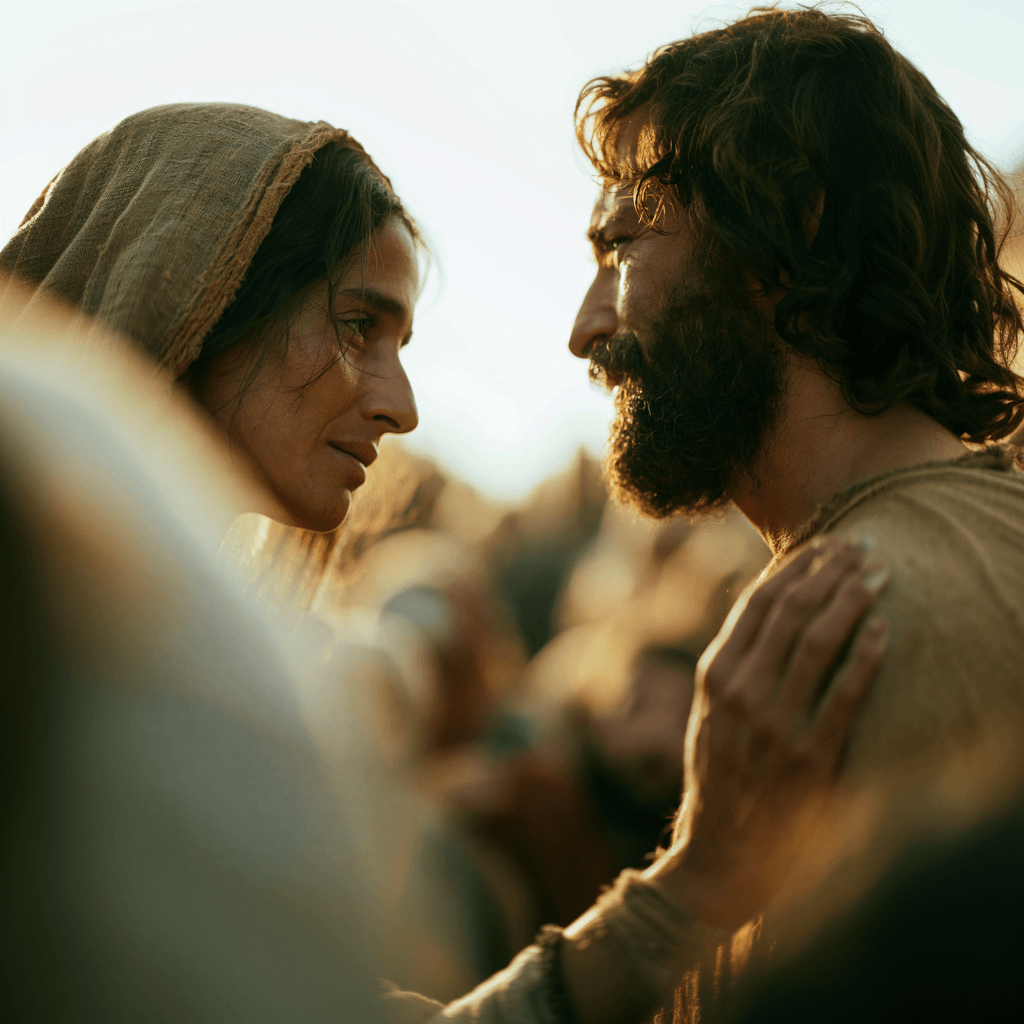
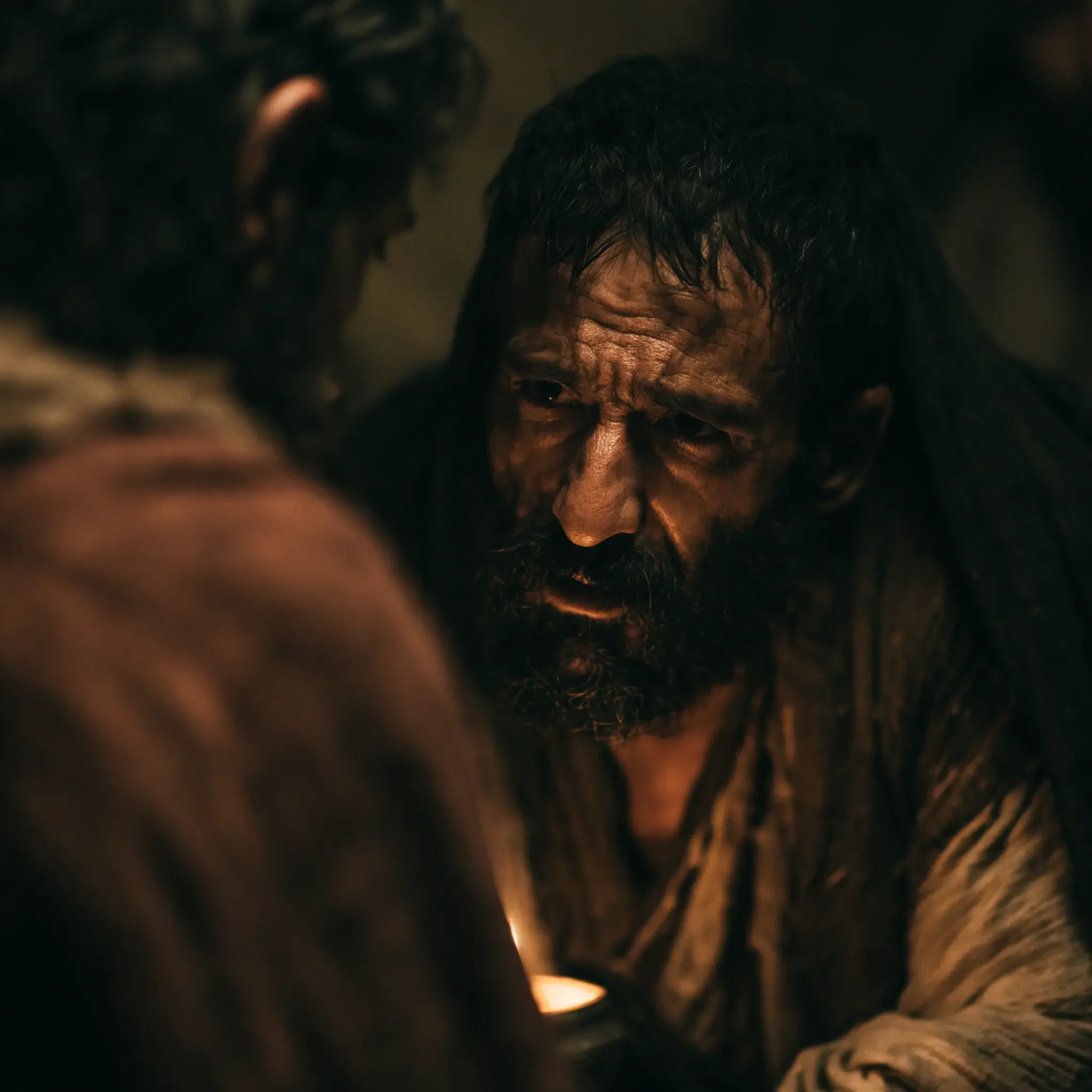
Nicodemus in the Gospel of John: From the Darkness of Night to the Light of the Cross
He comes at night.
That is the first thing John tells us about Nicodemus, and it is not incidental. Night in John’s Gospel is never just a time of day. It is a condition. It is where Judas goes after leaving the Upper Room to betray Jesus. It is what the Prologue has been warning against since its opening lines, when the darkness tried and failed to overcome the light. When Nicodemus comes to Jesus in the dark, John is telling us something about where Nicodemus is — not geographically, but spiritually.
And yet he comes. That matters too.
He is a Pharisee, a ruler of the Jews, a teacher of Israel — titles that in John’s Gospel usually signal opposition to Jesus. The Pharisees are the ones who question the healing of the blind man, who plot against Jesus after the raising of Lazarus, and who stand in the crowd before Pilate calling for crucifixion. Nicodemus belongs to this world. He is one of its most credentialed members.
But he comes.
And what happens in the conversation that follows, and in the two brief moments John gives us of Nicodemus later in the Gospel, is one of the most quietly compelling character arcs in all of Scripture. A man arrives in the dark, confused and cautious. He leaves the Gospel standing in the open, in the afternoon, holding burial spices for a man the authorities have just executed.
John never tells us what Nicodemus believes. He shows us what Nicodemus does. And what he does, by the end, speaks for itself.
Key Facts: Who Was Nicodemus in Biblical History?
-
Nicodemus, a Pharisee and member of the Sanhedrin, the ruling council of the Jewish people
-
A religious leader and teacher who seeks out Jesus privately and appears three times across John’s Gospel
-
Comes to Jesus at an unspecified location at night; later speaks in a council chamber; finally appears at the tomb after the crucifixion
-
First appearance early in Jesus’ ministry (John 3); second during the Feast of Tabernacles (John 7); third at the burial of Jesus (John 19)
-
His three appearances trace a journey from cautious inquiry in the dark to open, costly devotion in the light — one of John’s most carefully drawn portraits of faith in motion
The Pharisee and the Teacher: Understanding His Identity and Status
Nicodemus is introduced with three titles: Pharisee, ruler of the Jews, and teacher of Israel. Each one places him at the summit of the religious establishment. The Pharisees were the most respected interpreters of the Jewish law. The Sanhedrin — the council of rulers — held authority over Jewish religious life. A teacher of Israel was a recognized master of Scripture, a man whose learning commanded respect.
He is, in other words, exactly the kind of person who should not need to come to Jesus. He has the answers. He has the credentials. He has the institution behind him. And he comes anyway, in the dark, and says: Rabbi, we know you are a teacher who has come from God, for no one can do these signs that you are doing unless God is with him.
The “we” is interesting. Nicodemus speaks for more than himself. There are others among the religious establishment who are watching Jesus and drawing the same conclusion. But they are not here. Nicodemus is the one who came.
That gap between thinking something might be true and being willing to act on it is where Nicodemus lives at the beginning of his story. It is where a great many people live. And it is exactly the territory John’s Gospel is most interested in exploring.
The Three Appearances: Tracking His Journey Across John’s Gospel
Nicodemus’s journey through the Gospel of John unfolds across three distinct moments that trace his profound spiritual transformation. From a hesitant nighttime seeker to a cautious defender among his peers, and finally to a bold disciple standing at the tomb in broad daylight, these three appearances reveal a quiet but powerful shift from darkness to light.
-
John 3:1–21
The conversation that night was one of the strangest in any Gospel. Jesus does not answer what Nicodemus says. He answers what Nicodemus needs to hear, which is a different thing entirely.
No one can see the kingdom of God without being born again. Born from above. Born of water and Spirit.
Nicodemus is thrown. He is a master of the law, and he cannot parse this. Can a man enter his mother’s womb a second time? He is asking the question literally because he does not yet have the framework to ask it any other way. Jesus presses further: “Are you a teacher of Israel and you do not understand this? The wind blows where it will. You hear its sound but you do not know where it comes from or where it goes. So it is with everyone born of the Spirit.”
And then — in the middle of this conversation, or perhaps after Nicodemus has gone, the transition is not entirely clear — John records the words that the Church has called the Gospel in miniature:
“For God so loved the world that he gave his only Son, so that everyone who believes in him might not perish but might have eternal life.”
Nicodemus does not respond. John does not tell us what he thinks or feels or does when he goes back into the night. The conversation simply ends, and Nicodemus disappears from the narrative.
But something has been planted. The seed of it will take time to grow. It always does.
-
John 7:45–52
The second appearance is brief — four verses — and it arrives like a small light in a dark room.
The Feast of Tabernacles is underway in Jerusalem. The chief priests and Pharisees have sent guards to arrest Jesus. The guards come back empty-handed. Never has anyone spoken like this man, they say. The Pharisees are furious. Have any of the authorities or the Pharisees believed in him? The crowd is accursed, they say — they do not know the law.
And then Nicodemus speaks.
“Does our law condemn a person before it first hears him and finds out what he is doing?”
It is not a declaration of faith. It is a procedural objection, a request that the council follow its own rules. But in the context of this room, at this moment, it is a remarkable thing to say. He is the only voice in the chamber willing to slow things down. The only one suggesting that Jesus deserves a fair hearing.
The council turns on him immediately. Are you from Galilee too? Search and see that no prophet arises from Galilee. It is a dismissal and a small humiliation. Nicodemus says nothing more.
He has not declared himself. He has not come into the light. But he has spoken, in a room full of powerful men who hate Jesus, in a way that slows the machinery of condemnation for one moment. It is not nothing. It is a man doing the most he can at this point in his journey, which is more than anyone else in that room is doing.
-
John 19:38–42
The third appearance is the one that costs something.
Jesus has been crucified. Joseph of Arimathea, also a secret disciple, went to Pilate and asked for the body. And then John tells us, "Nicodemus also came."
He brings myrrh and aloes, about a hundred pounds. It is an extraordinary amount — a quantity fit for a king. He and Joseph take the body of Jesus, wrap it in linen cloths with the spices, and place it in a new tomb in a nearby garden.
Think about what this means. The crucifixion has just happened. The authorities who ordered it are still in power. To be seen handling the body of a man executed as a criminal and a blasphemer is not a neutral act. It is a declaration. It is the kind of thing that ends careers, invites scrutiny, and permanently associates you with someone the establishment has decided is dangerous.
Nicodemus does it anyway. In the open. In the afternoon. With a hundred pounds of burial spices and no apparent concern for who sees him.
The man who came to Jesus in the dark now stands in the daylight, holding the body of the one he had come to question in secret three years earlier.
John does not tell us that Nicodemus believes. He never does. But he shows us what Nicodemus does at the moment it costs the most to do anything at all. And that is enough.
Theological Themes: What John Reveals Through the Journey of Nicodemus
Through the story of Nicodemus, John offers a profound look at what it really means to step into the light. He shows us that faith is rarely a single, neat event, but rather a slow, ongoing journey—one that begins with a disorienting conversation about being "born again" and ultimately demands a costly, public stand.
-
Nicodemus does not have a sudden conversion. He does not fall to his knees or say a prayer or make a declaration. He moves slowly, in increments, from darkness toward light. First, a night visit. Then a word in a council chamber. Then a public act of devotion at the tomb.
John’s Gospel is sometimes read as demanding immediate, decisive belief — and there are moments that support that reading. But Nicodemus suggests something else is also true: that faith can be a long, gradual, costly movement toward the light, made one small step at a time, and that Jesus does not disqualify the person who is still on the way.
-
John’s Prologue sets up a stark contrast: the light has come into the world, and people preferred darkness to light because their works were evil. This is a spiritual diagnosis, not a moral condemnation. People stay in the dark because coming into the light exposes them — their questions, their uncertainties, their willingness to consider that everything they have built their life on might need revision.
For Nicodemus, a Pharisee and ruler of the Jews, the cost of coming into the light is not abstract. It is his reputation, his position, his standing among his peers. He knows what happened to the man born blind who spoke up for Jesus — they threw him out. He knows what the council intends. And yet by John 19, he is standing in the open with burial spices.
The light has cost him something. He pays it.
-
The phrase Jesus uses with Nicodemus — "born again," or "born from above" — is one of the most debated and most quoted in the entire New Testament. It has entered the broader culture far beyond the Church. And it begins here, in a nighttime conversation with a confused Pharisee who cannot quite parse what he is being told.
The Catholic tradition has always understood this birth as Baptism — the sacrament of water and Spirit that Jesus explicitly names in this conversation. To be born of water and Spirit is to be baptized into the life of God. It is the entry point into the kingdom. The Catechism of the Catholic Church grounds its teaching on Baptism in this passage (CCC 1215), and the Church has read this conversation as the scriptural foundation for the sacrament's necessity since the earliest centuries.
Nicodemus asks his confused question — can a man enter his mother’s womb again? — and gets an answer that the Church is still unpacking two thousand years later. He is the occasion for one of the most important theological conversations in the history of the faith.
Liturgical Legacy: The Catholic Tradition, Baptism, and the OCIA
The Church has always seen Nicodemus as a figure of the inquirer — the person who is drawn toward the faith but has not yet fully entered it. His nighttime visit has been read as the prototype of the catechumen, the one who comes to learn before they are ready to declare.
In the early Church, the period of preparation before Baptism was long and serious. Catechumens attended the Liturgy of the Word but were dismissed before the Liturgy of the Eucharist. They were, in a sense, still in the night — approaching the light but not yet fully in it. Nicodemus is their patron.
His conversation with Jesus in John 3 also serves as the scriptural foundation for the Church’s rite of Baptism. The words born of water and Spirit are not incidental. They are the basis for the Church’s understanding that Baptism is necessary for salvation — not because God’s mercy is limited, but because Jesus said so to Nicodemus, and the Church takes Jesus at His word.
The Rite of Christian Initiation of Adults — the RCIA, now called the Order of Christian Initiation of Adults (OCIA) — is in some sense the institutional memory of Nicodemus. Every adult who enters the Church through a period of inquiry and formation is walking the same road he walked: from the dark, toward the light, one careful step at a time.
Why His Story Matters: The Cost of a Slow and Public Faith
Nicodemus is the Gospel’s great portrait of slow faith. He is for everyone who has ever felt drawn to Jesus but not yet ready to say so publicly. For everyone who has asked their questions in private and not yet found the courage to ask them out loud. For everyone who is somewhere between the night visit and the burial spices, still making their way from darkness toward light.
John does not judge him for his slowness. He records his journey with care and without condemnation, showing us a man who moves at the pace he can manage and who, in the end, arrives at the place that costs him the most to reach.
He comes at night.
He leaves in the light.
That movement is the whole of it. That movement is what the Gospel is asking of everyone who reads it.
“For God so loved the world that he gave his only Son, so that everyone who believes in him might not perish but might have eternal life.”
These are the words Nicodemus heard in the dark. Whether they were the words that finally brought him into the light, John does not say. But he was there at the tomb. Holding a hundred pounds of burial spices. In the afternoon. In the open.
That is answer enough.