Pontius Pilate in the Gospel of John: The Limits of Worldly Power and the Trial of Truth
He is the most powerful man in the room, and he cannot do what he wants.
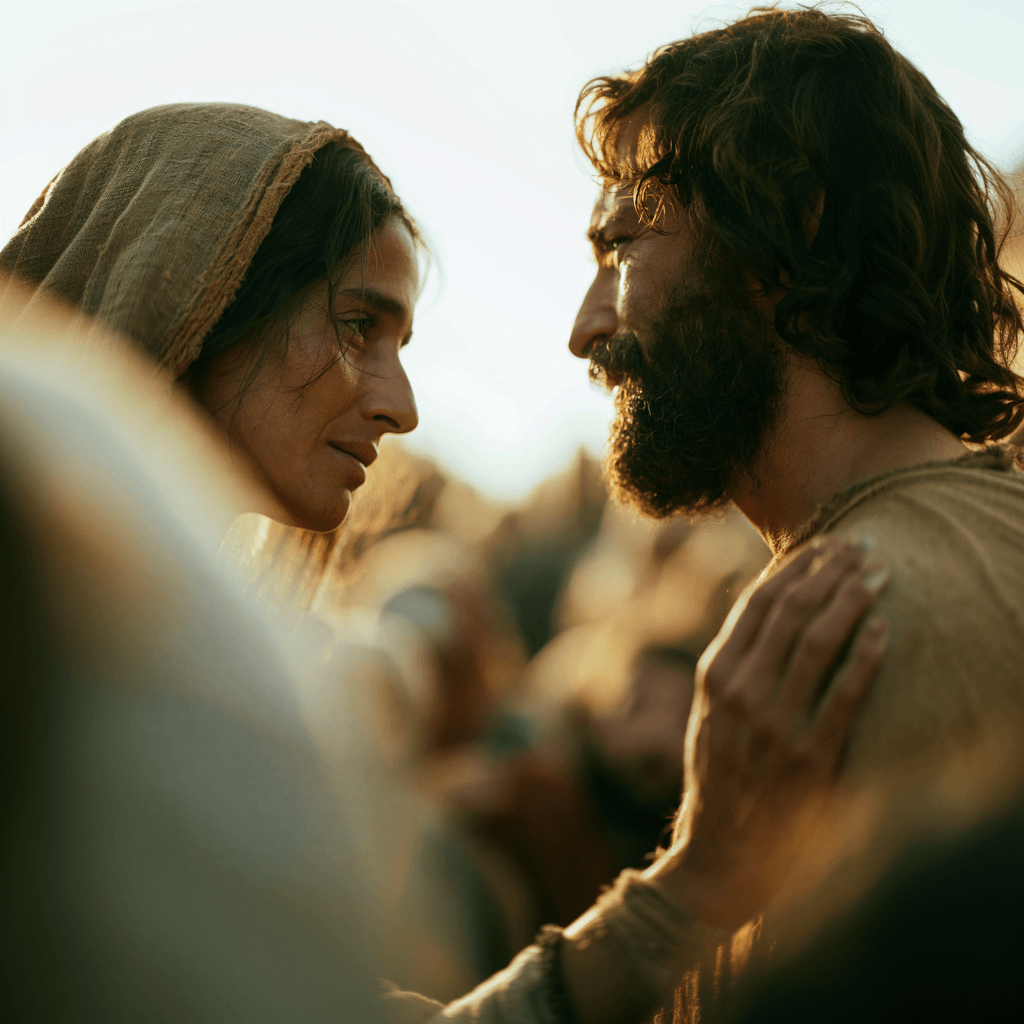
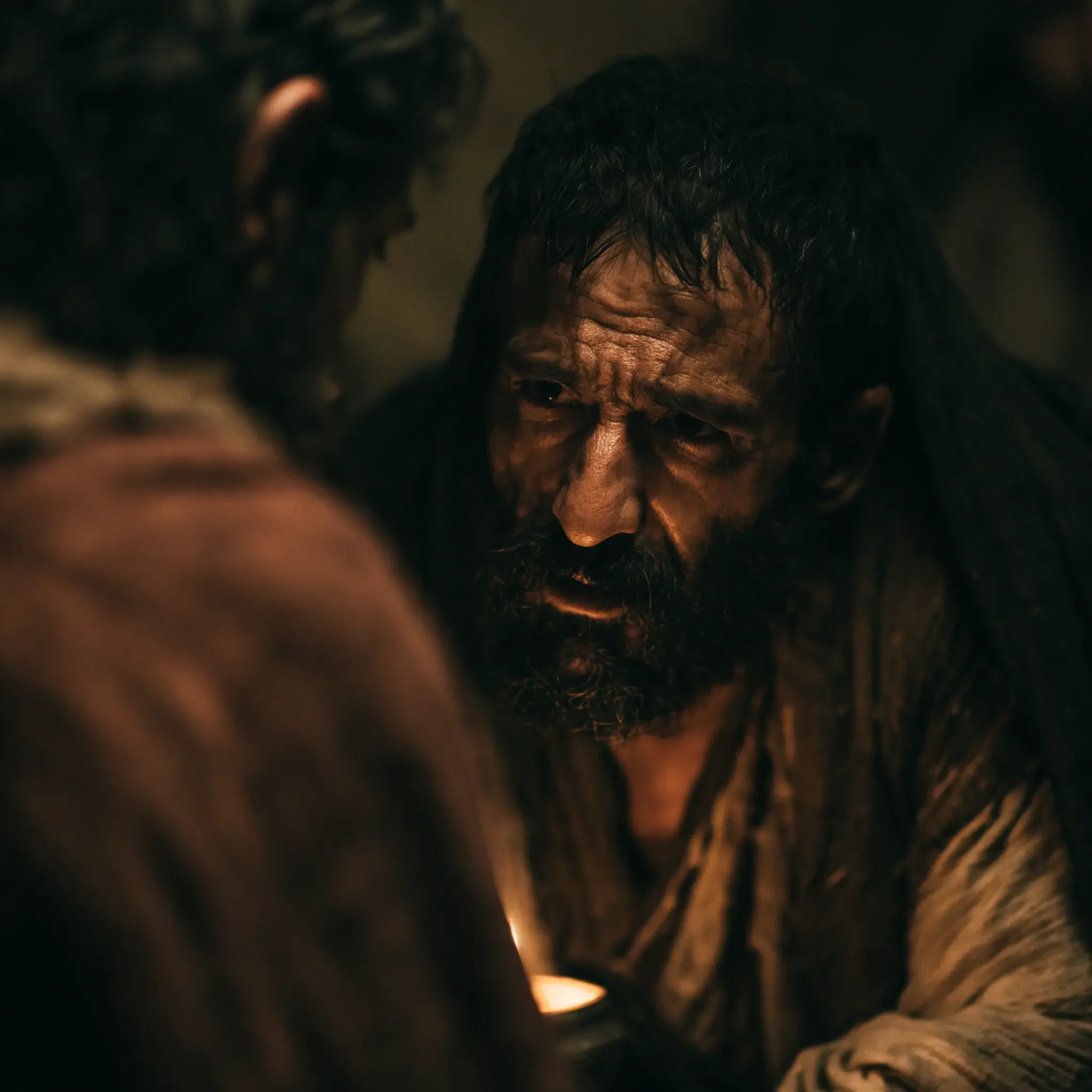
Pontius Pilate, prefect of Judea, representative of the Roman Empire in one of its most volatile provinces, sits at the intersection of two worlds he does not fully control. On one side is the crowd — the chief priests and their followers, furious, insistent, threatening to report him to Caesar if he does not comply. On the other side is a prisoner who will not defend himself, whose answers keep opening into depths that Pilate is not equipped to navigate, who stands before the most powerful authority in the province and behaves as though the power in the room belongs to him.
John’s account of the trial before Pilate is the longest in any Gospel. He devotes nearly two full chapters to it. And he structures it not as a legal proceeding but as a philosophical confrontation — a dialogue between a man who holds the world’s power and one who claims to embody the world’s truth.
Pilate asks the question that has echoed across two thousand years of philosophy and theology, and human longing:
“What is truth?”
He does not wait for the answer. He walks away.
That is Pilate’s tragedy in three words. Not that he is evil. Not that he is cruel. But he stands before the answer to the most important question he has ever asked, and he turns and walks back out the door.
Key Facts: Who Was Pontius Pilate in Biblical History?
-
Pontius Pilate, Roman prefect of the province of Judea, appointed by Emperor Tiberius
-
The Roman authority who presides over the trial of Jesus and ultimately hands him over for crucifixion
-
The praetorium — the Roman governor’s headquarters in Jerusalem — and the judgment seat outside it
-
The morning of Good Friday, at the time of the Passover
-
John gives him more stage time than any other Gospel writer, turning the trial into a theological confrontation between Roman power and divine truth — and a portrait of a man who knows what he should do and cannot bring himself to do it
The Prefect of Judea: Understanding His Identity and Roman Authority
Pontius Pilate served as prefect of Judea from approximately AD 26 to AD 36 — a decade that covers the entirety of Jesus’ public ministry and execution. He was a mid-ranking Roman official, appointed by the emperor, responsible for maintaining order, collecting taxes, and administering justice in one of the empire’s more difficult postings.
Judea was not a prestigious assignment. It was a province full of religious complexity, nationalist sentiment, and periodic unrest. Pilate’s job was to keep the peace, which meant managing the Jewish religious authorities carefully and responding decisively when the situation threatened to escalate. He had the power of life and death. He had the legions behind him. And he had, as John’s Gospel makes vivid, the constant pressure of a political situation that left him very little room to act on his own judgment.
He appears in all four Gospels, but John’s portrait is the most extended and the most psychologically complex. In John, Pilate is not a villain in the ordinary sense. He is a man caught — caught between what he knows to be true and what the situation demands of him, between his own assessment of the prisoner and the political reality that makes acting on that assessment impossible.
He is, in other words, recognizable. The particular form of his failure, knowing the right thing and doing the expedient thing instead, is one of the most common failures in human history. It is why the Nicene Creed names him by name, every time it is recited, at every Mass, in every language on earth: suffered under Pontius Pilate. His name is in the Creed not as a condemnation but as a historical anchor. It happened. At a specific time. Under a specific authority. This is not a myth.
The Trial of Jesus: A Drama of Seven Scenes inside the Praetorium
John structures the trial before Pilate as a carefully composed drama. Pilate moves back and forth between two spaces — inside the praetorium, where Jesus is, and outside, where the crowd is. Each movement is a choice. Each choice reveals a little more of who Pilate is and what he is up against. John gives us seven distinct exchanges, and together they form one of the most sustained dramatic sequences in the New Testament.
-
John 18:28–32
The religious authorities will not enter the praetorium. It is the morning of Passover, and entering a Gentile building would render them ritually unclean and unable to eat the Passover meal. So they stand outside and deliver their prisoner to Pilate, who comes out to them.
“What accusation do you bring against this man?”
“If he were not a criminal, we would not have handed him over to you.”
It is not an answer. It is a demand that Pilate ratify a verdict they have already reached. He pushes back: “Take him yourselves and judge him according to your law.”
They tell him they do not have the authority to execute anyone. And John notes — as he always notes when something is being fulfilled — that this happened so that the word of Jesus might be fulfilled, indicating the kind of death he was going to die.
Pilate goes back inside.
-
John 18:33–38
“Are you the king of the Jews?”
It is Pilate’s first question, and it is the right question. Not are you a criminal, nor are you a blasphemer, but are you a king. Rome has a very specific interest in the answer.
Jesus answers a question with a question: “Do you say this on your own, or have others told you about me?”
Pilate’s response is sharp and slightly contemptuous: “I am not a Jew, am I? Your own people and chief priests handed you over to me. What have you done?”
And then Jesus says the thing that changes the nature of the conversation entirely: “My kingdom does not belong to this world. If it did, my servants would fight. But my kingdom is not here.”
Pilate seizes on the word: “So you are a king?”
“You say I am a king. For this I was born, and for this I came into the world: to testify to the truth. Everyone who belongs to the truth listens to my voice.”
“What is truth?”
He does not wait for the answer. He goes back outside.
This is the hinge of the entire trial. Everything that follows is Pilate trying to get out of a situation he has already understood. He knows this man is not guilty of what the crowd is accusing him of. He knows, on some level, that something more than a political problem is standing in front of him. And he walks away from it.
-
John 18:38–40
“I find no guilt in him.”
It is the first of three times Pilate will say this. He says it clearly, plainly, with apparent conviction. And then, in the same breath, he offers the crowd a way out — a Passover custom of releasing one prisoner. “Do you want me to release the king of the Jews?”
They want Barabbas. John adds a single detail about Barabbas that carries enormous weight in context: he was a revolutionary.
They choose the revolutionary over the king who says his kingdom is not of this world. They chose the man of violence over the man who told Peter to put his sword away. The irony is precise, and John intends every bit of it.
-
John 19:1-5
Pilate has Jesus flogged. His soldiers weave a crown of thorns and put it on His head, drape a purple cloak over his shoulders, and mock Him: hail, king of the Jews. They strike Him.
Then Pilate brings Him out again and says, for the second time: “I find no guilt in Him.”
He presents the flogged, crowned, mocked figure to the crowd and says: “Behold the man.” Ecce homo.
He is trying to generate pity. He is showing them what has already been done to Jesus, hoping it will be enough, hoping the crowd will let it go at this. He is trying to find a third way between what he knows is right and what the situation is demanding.
There is no third way. There never is.
-
John 19:6–11
“Crucify him, crucify him,” the chief priests and guards shout.
“Take him yourselves and crucify him,” Pilate says. “I find no guilt in him.”
The third declaration of innocence, and now the religious authorities change tactics. “We have a law,” they say, “and according to that law he ought to die, because he made himself the Son of God.”
When Pilate hears this, John tells us, he becomes more afraid.
More afraid. He was already afraid. Something in the bearing and the words of this prisoner has been unsettling him since the beginning of the interrogation. Now he hears Son of God and goes back inside.
“Where are you from?” he asks Jesus.
Jesus gives him no answer.
“Do you not speak to me? Don’t you know I have the power to release you and the power to crucify you?”
“You would have no power over me if it had not been given to you from above. For this reason, the one who handed me over to you has the greater sin.”
It is a theological statement dressed as a legal one. Pilate’s power is real. It is also derivative. It comes from somewhere he did not create and cannot control. He is not the ultimate authority in this room, and Jesus is telling him so directly, in his own praetorium, on the morning he is going to hand him over to be executed.
From that moment, John says, Pilate tried to release him.
-
John 19:12–16
“If you release this man, you are not a friend of Caesar. Everyone who makes himself a king opposes Caesar.”
It is the pressure point they have been looking for. Pilate’s political position depends on Caesar’s confidence. A complaint to Rome that he released a man who claimed to be king could end his career, his freedom, and possibly his life. The crowd knows this. They have found the lever.
Pilate brings Jesus out one more time. He sits on the judgment seat at a place called Stone Pavement, in Aramaic, Gabbatha. John tells us the time: it is about noon on the day of Preparation for Passover. The sixth hour. In the Temple courts across the city, the Passover lambs are beginning to be slaughtered.
“Here is your king,” Pilate says to the crowd.
“Take Him away, take Him away, crucify Him.”
“Shall I crucify your king?”
“We have no king but Caesar,” the chief priests answer.
Then he hands Him over to be crucified.
He has said three times that Jesus is innocent. He has tried multiple times to release Him. He has been unsettled, afraid, searching for a third way that does not exist. And in the end, he does the thing he knows is wrong because the alternative is too costly.
-
John 19:19‣20
Pilate has a notice prepared and fixed to the cross. Jesus the Nazorean, the King of the Jews. In Hebrew, Latin, and Greek — the three languages of the world he inhabits, the languages of religion, empire, and culture.
The chief priests object: “Do not write the king of the Jews, but that He said He was the king of the Jews.”
What I have written, I have written.
It is the last thing Pilate says in John’s Gospel. Three words in the original Latin — quod scripsi scripsi — that ring with a strange authority. He has handed Jesus over to be crucified while declaring Him innocent. He has bent to every pressure the crowd applied. He has chosen his career over his conscience.
But this one thing he will not change. The sign stays. Jesus the Nazorean, the King of the Jews, in every language the empire speaks.
He does not know what he is doing. He is doing it anyway.
Theological Themes: What John Reveals Through the Tragedy of Pilate
In his portrayal of Pontius Pilate, John gives us more than just a historical record of a Roman governor; he offers a profound meditation on the limits of earthly authority. Through Pilate’s tragic hesitation and ultimate surrender to the crowd, John illustrates the dangerous and timeless space between recognizing the truth and actually having the courage to stand by it.
-
Pilate has every advantage in this encounter. He has the authority of Rome behind him, the power of life and death, the legions, the law. And Jesus has nothing — no army, no political allies, no legal standing. He is a prisoner from a minor province with no one to speak for Him.
And yet, from the first exchange, it is clear that something is wrong with this picture. Jesus keeps answering Pilate’s questions in ways that reframe the entire situation. My kingdom is not of this world. You would have no power over me if it had not been given to you from above. Pilate is supposed to be the one conducting the interrogation. He keeps feeling interrogated.
John is making a theological point through the drama of the trial. Roman power — the most formidable human power the ancient world had produced — is real and limited. It can kill the body. It cannot touch the kingdom that is not of this world.
-
“What is truth?”
Pilate asks this question and walks away without waiting for the answer. That walk — that turning away — is the whole of his character in one gesture. He is not asking a sincere philosophical question. He is dismissing the concept. Truth, in Pilate’s world, is what you can enforce. It is what survives politically. It is what Caesar ratifies.
And he is standing in front of the one who said: “I am the way, the truth, and the life.”
He does not know this. But John’s reader does. And the gap between what Pilate asks and what Pilate is standing in front of is one of the most devastating ironies in the entire Gospel.
-
Suffered under Pontius Pilate. The Nicene Creed names him, and it names him every time, without exception, in every language, at every Mass. There is no version of the Creed in which his name does not appear.
This is not primarily a condemnation. It is a historical claim. The events of Good Friday happened at a specific time, in a specific place, under a specific authority. Pontius Pilate is the timestamp. His presence in the Creed is the Church’s insistence that the Incarnation, the Passion, and the Resurrection are not mythology. They are history. They happened when Pilate was prefect. They happened when Caesar was Tiberius. They happened in the world that can be dated, verified, and located.
Pilate tried to wash his hands of it. The Creed will not let him.
Why His Story Matters: The Cost of Pragmatism and an Unanswered Question
Pilate is not a monster. That would make him easier to dismiss. He is something more uncomfortable: a reasonable man, an intelligent man, a man who can see clearly enough to declare the prisoner before him innocent three times — and still hands him over.
His failure is the failure of pragmatism over conscience. Of political calculation over moral clarity. Of asking what the truth is and then walking away before the answer can inconvenience him.
John gives him more space than any other Gospel writer because John understands that Pilate’s question is not just his question. It is the question for every reader who has ever stood before something true and found reasons not to act on it. What is truth? And what will you do when you find it?
The trial ends. Pilate’s name is included in the Creed. The sign stays on the cross in three languages.
Jesus the Nazorean, the King of the Jews.
What I have written, I have written.
“For this I was born, and for this I came into the world: to testify to the truth. Everyone who belongs to the truth listens to my voice.”
Pilate did not belong to the truth. He heard the voice and walked away.
That is the most sobering thing John’s Gospel says about him. And it says it without a single word of condemnation. It simply shows us what happened, and lets the reader sit with the question Pilate asked and did not wait to have answered.